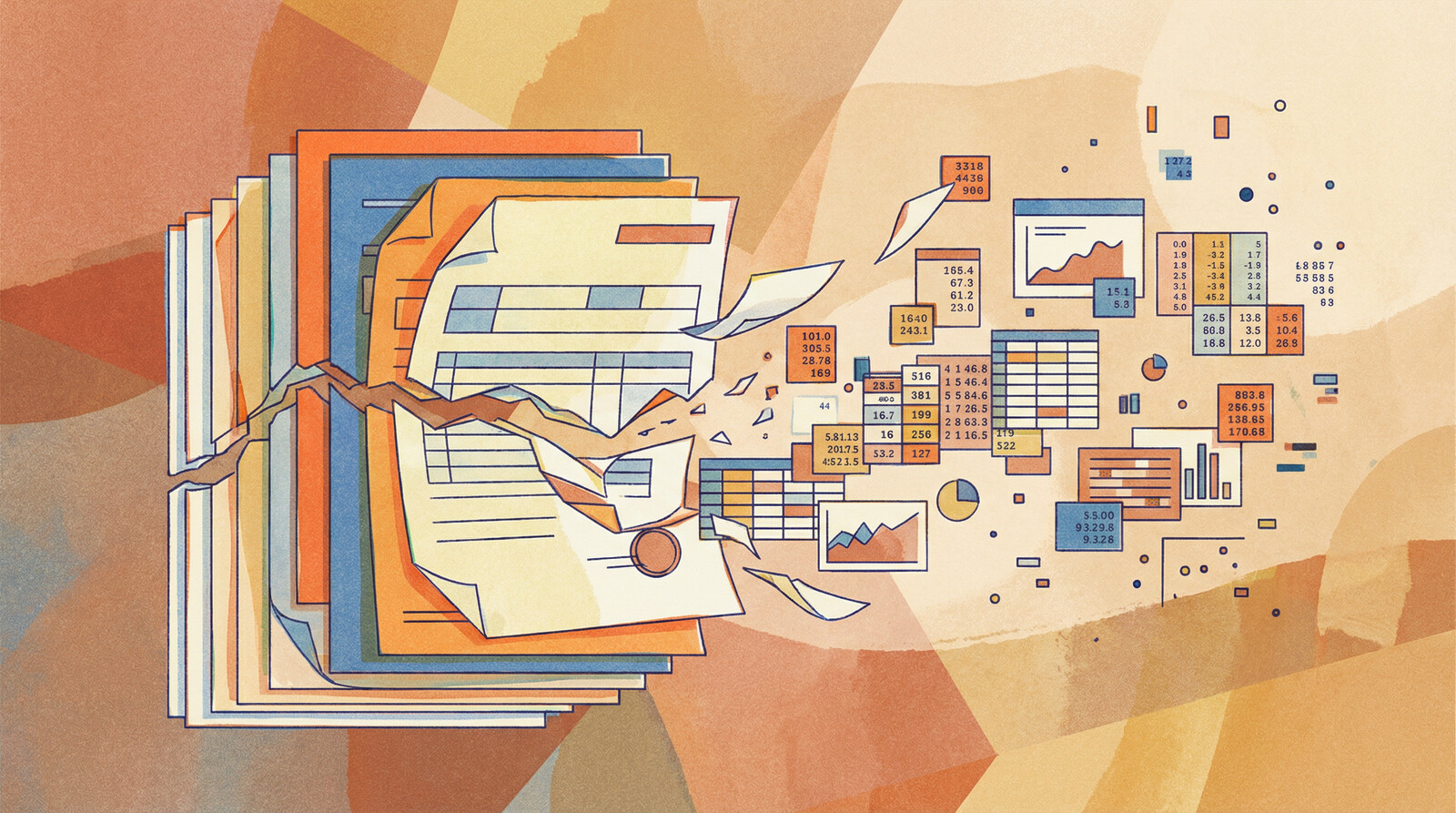
"Is your lab data valid?"
Most environmental professionals hear this question and immediately think about quality assurance: Were the holding times met? Did the lab blanks pass? Are the spike recoveries within range?
Those are the right questions for analytical validity. But they're not sufficient for defensibility.
Because when data lives in a spreadsheet or database—just columns of numbers disconnected from the documents that explain where those numbers came from—you have analytical validity without evidentiary validity.
What Gets Lost in the Spreadsheet
Lab data doesn't materialize out of nowhere. Behind every concentration value is a chain of documentation:
- The field report describing when and where the sample was collected
- The chain of custody form tracking the sample from field to lab
- The lab certificate of analysis showing the analytical results
- The data validation report reviewing whether the results meet QA-QC requirements
- The investigation report placing that sample in the context of the broader study
When you extract data into a spreadsheet, that chain breaks. You get the number. You lose the provenance.
For many routine tasks, that's acceptable. You need benzene concentrations to generate a plume map. You don't need to revisit the original COA every time.
But when a regulator asks about a specific exceedance, or opposing counsel wants to understand when contamination was first detected, or a client needs to know which investigation produced a particular data point, the spreadsheet doesn't answer those questions.
You need the documents. And if your data isn't linked back to those documents, you're starting a research project instead of providing an answer.
The Traceability Problem at Scale
This problem compounds with site complexity:
Multi-phase sites. A property investigated across 30 years has data from dozens of investigations. Which data came from the Phase II? Which came from the remediation monitoring? Which came from the closure assessment?
Multiple labs. Different investigations used different analytical labs with different reporting formats. When you see "10 mg/kg TPH" in your spreadsheet, which lab reported it, and what was their detection limit?
Data reinterpretation. Tier 1 guidelines get updated. New contaminants get added to regulatory lists. You need to re-evaluate historical data, but first you need to understand what that data represents—what matrix, what investigation, what site conditions were present when it was collected.
Litigation discovery. When your site history becomes evidence, you'll be asked to produce the source documents that support every claim in your expert report. If your data table says "elevated arsenic detected in 1993," you need to be able to point to the 1993 investigation report and the specific sample results.
If the link between data and documents is manual—searching file folders, cross-referencing report dates, hoping the sample IDs match—that's fragile institutional memory. It works until the person who remembers how the data was organized leaves the project.
Data Validity Means Data Context
Statvis doesn't treat data and documents as separate systems. When you upload a lab COA or a data validation report, the data gets extracted and linked back to its source.
That means when you view a sample result in Explore, you can immediately navigate to:
- The lab certificate of analysis that reported it
- The field documentation that describes the sampling event
- The data validation report that reviewed the result
- The investigation report that interpreted the finding
And because the data is extracted directly from lab certificates rather than manually transcribed, you eliminate an entire category of error: the copy-paste mistake that turns "1.2 mg/kg" into "12 mg/kg" or drops a decimal place in a table transfer.
More than that, Statvis can identify discrepancies between what a lab COA reports and what an environmental report claims. If a consultant's data table shows different values than the source lab certificate, that gets surfaced. It's an extra layer of verification that catches transcription errors before they compound into analytical errors.
It's not just about having the data on a map. It's about having the complete evidentiary chain from the map back through every document that explains what that data represents—and knowing that chain is accurate because the data was never manually transcribed.
That's what makes data defensible. Not just analytically valid—but traceable, verifiable, and connected to the documentation that establishes its context.
Valid Data Is Traceable Data
Passing QA-QC is necessary but not sufficient. Data without traceability is data without context. And data without context can't withstand regulatory scrutiny, litigation discovery, or the simple question: "Where did this number come from?"
Statvis connects data to documents because that's what defensible environmental work requires. The map shows concentrations. The source documents show where those concentrations came from, when they were measured, and how they were validated.
You shouldn't have to choose between having your data visualized and having your data traceable. With Statvis, you get both.