

Sites differ by industry. The record works the same way.
A wellsite, a tailings facility and a former rail yard leave different chemistry, different paperwork and different closure rules.
Three industries we know well. Decades of sites in each.

Upstream, midstream and downstream
Oil and gas
Wellsites, batteries, pipelines, gas plants and retail fuel sites, often hundreds to a portfolio, each with its own history of spills, assessments and owners.
- Salinity separated into natural background and produced-water impact
- Alberta Tier 1 and Tier 2 screening by depth and media
- Portfolio ranking and document naming at the scale of a licensee's inventory
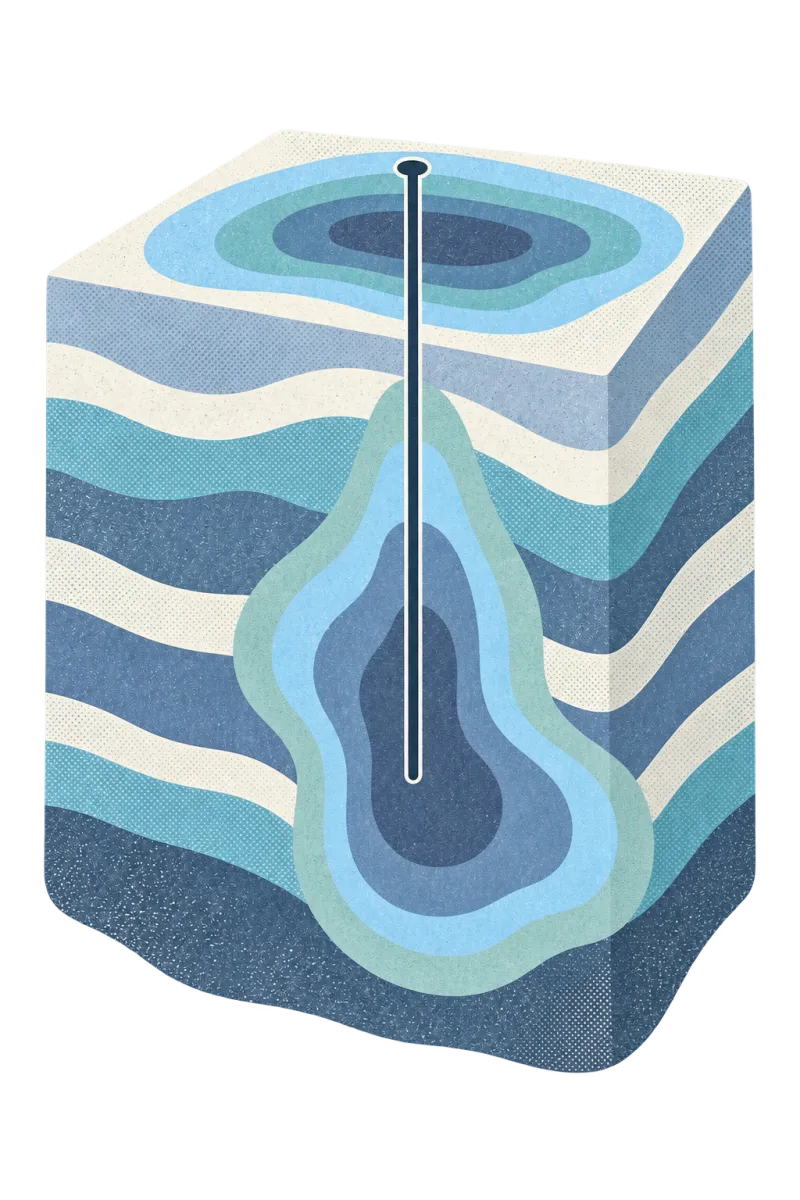
Operating, closed and historical mines
Mining
Tailings, waste rock and long monitoring records that pass through several owners and consultants before closure planning starts.
- Decades of monitoring tables from scanned reports, traced to page and cell
- Mann-Kendall trends on every well and every analyte
- 3D interpolation, cross-sections and volumes for closure planning
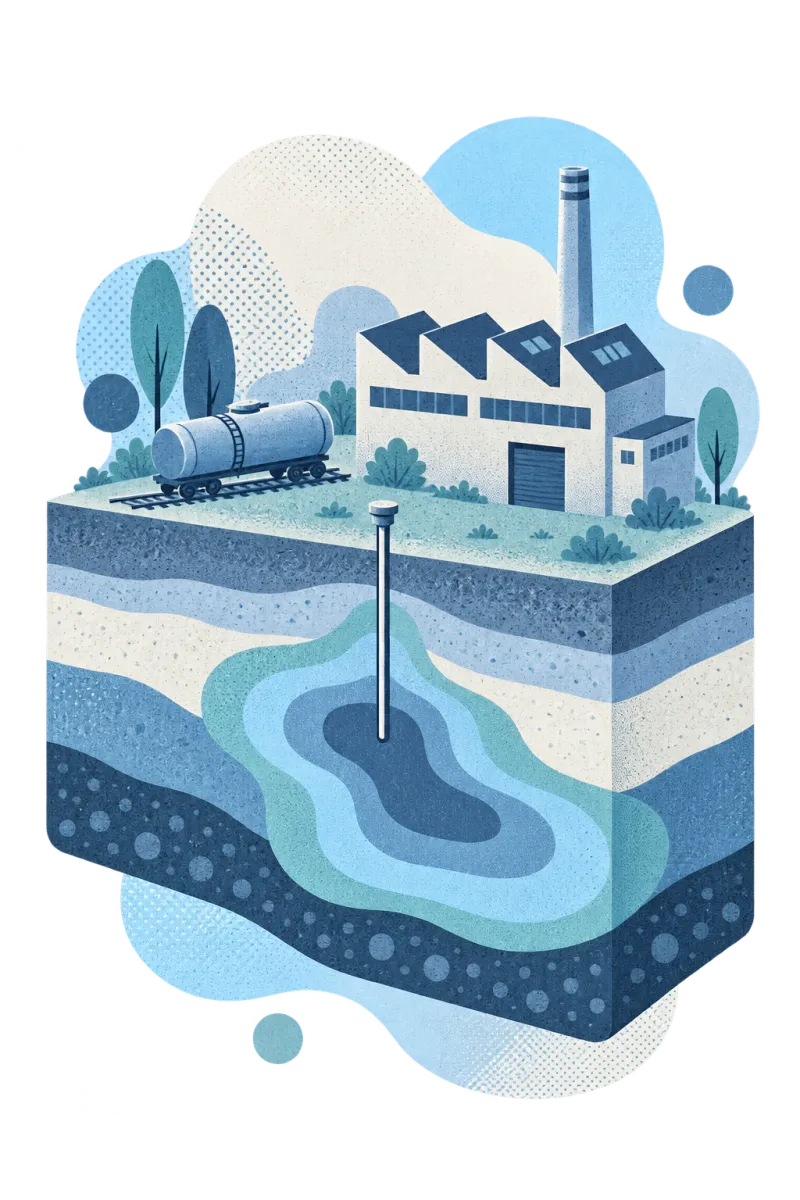
Plants, rail yards and commercial properties
Commercial and industrial
Properties that pass through many owners and uses, where solvents, metals, PCBs and PAHs from different eras can share one site.
- A cited history of owners, tenants and operations
- Old site plans and APECs placed on today's map
- PAH and PFAS fingerprints to separate sources
Whatever the industry, it starts with the file.
- Every page readScanned reports, lab certificates, borehole logs, regulator letters and old site plans, read into one record for each site.
- Every answer citedResearch answers and timeline events link to the page and passage they came from, so a reviewer can check them.
- Every result screenedLab tables become data, traced to page and cell, and are screened against the guidelines that apply.
- Each site its own vaultSite files stay confidential and are never used to train models. Trust
Also used on other contaminated sites.
Airports
Fuel farms, hangars and fire-training areas, where PFAS-containing firefighting foam (AFFF) was used, a concern examined in the National Academies report Use and Potential Impacts of AFFF Containing PFASs at Airports.
PFAS profiles are clustered sample by sample, so different sources can be told apart and shown on the map.
Superfund-type multi-party sites
Sites with many current and former owners, operators and waste contributors, where cleanup costs are shared among potentially responsible parties.
A shared, cited chronology and source fingerprinting support the evidence behind allocation and remedy decisions.
Prefer to start from your role or the job?
By role
Site owners & operators
Every site in the portfolio ranked on its own facts, with the record kept current.
Read moreBy role
Consultants
Start each phase from the full record instead of rereading the last team's files.
Read moreBy role
Environmental lawyers
Every claim traced to a document, page and passage that opposing counsel can follow.
Read moreBy job
Use cases
Site closure, litigation support, due diligence, cost allocation and regulatory submissions.
Read moreTake control of your contaminated sites.
Bring us one site's documents. We'll show you what's in them.