
Decades of mine records in one place. Closure built on them.
Statvis brings a mine's environmental reports, monitoring data and permits into one cited record, then adds groundwater trends, 3D cross-sections and volumes, and chemistry that compares every sample by its full profile.
A mine's record outlives the people who wrote it.
Mines are monitored for decades, often well past the end of production.
- Monitoring piles up. Seepage, groundwater, surface water and effluent results arrive round after round for years, in tables from different labs and different consultants.
- Old data is locked in scans. The baseline and the first decades of monitoring often exist only as tables in scanned reports.
- Ownership changes. A mine can pass through several operators before closure, each with its own file system and its own reading of the site.
- Closure costs rest on the record. Closure plans and reclamation cost estimates are only as good as the data and history behind them.
What a mine site file holds.
Mine waste
Tailings and waste rock
Facility designs, inspections, as-builts and the sampling around each tailings facility and rock dump, spread across decades of reports.
Geochemistry
Acid rock drainage and metal leaching
Static and kinetic test results and drainage chemistry, the subject of decades of Canadian research through the MEND program and BC's ML/ARD guidelines.
Monitoring
Long monitoring histories
Groundwater, seepage and surface water programs, plus effluent testing and environmental effects monitoring at mines covered by the federal Metal and Diamond Mining Effluent Regulations.
Closure
Closure plans and financial security
Permits, amendments, closure plans and the reclamation cost estimates behind the financial security a regulator holds.
Work from the whole record, not the last report.
Turn decades of scanned tables into data.
Statvis reads the lab tables in old monitoring reports and turns them into results you can screen, chart and map. Every value stays linked to the cell it came from, so a number in a closure plan can be checked against the original report.
- Scanned and digital lab tables read page by page
- Units, detection limits and qualifiers kept
Is the seepage getting better or worse?
Run Mann-Kendall trend tests across every monitoring well and every analyte at once, then isolate a well to see its direction, significance and fitted trend. The monitoring record stops being a stack of reports and becomes an answer.
- Mann-Kendall on every well at once
- Non-detects marked, not dropped
- Trend charts and tables for the annual report
See the site in section.
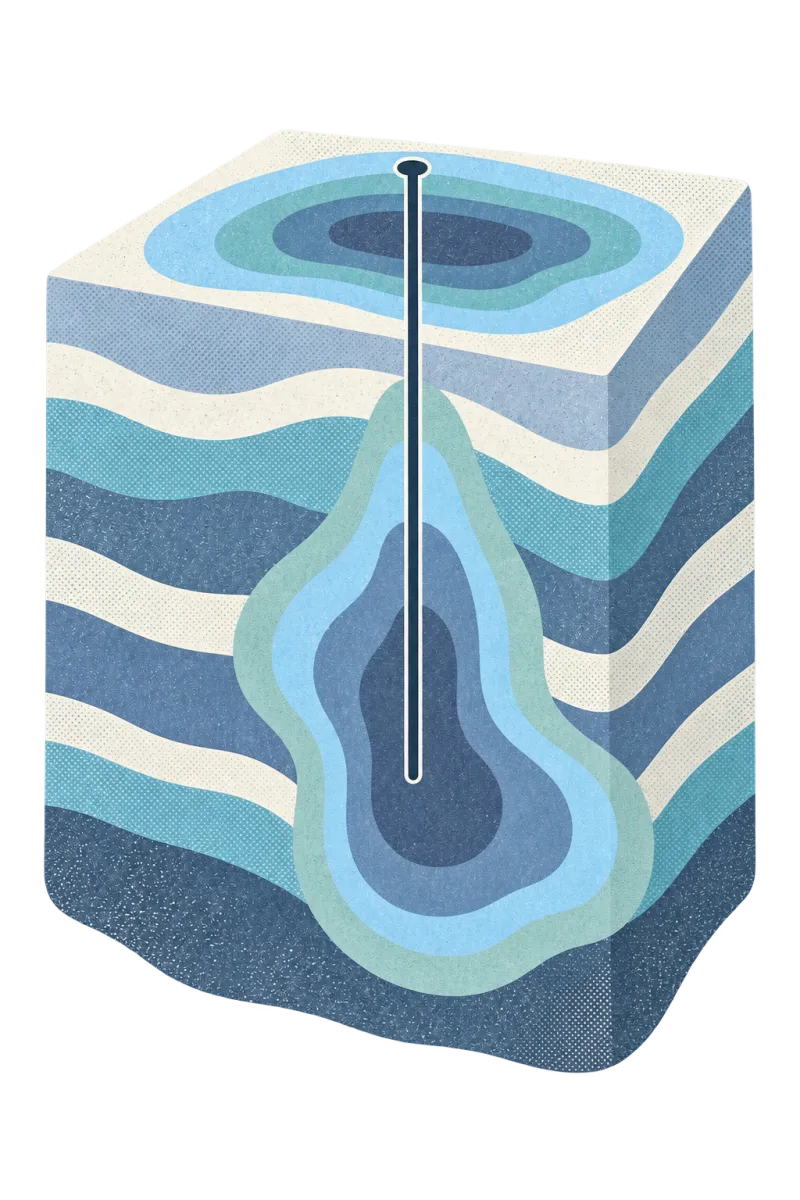
Results are interpolated in 3D from the boreholes and wells on record. Draw a line across the site to cut a cross-section, and calculate impacted volumes layer by layer for remediation and closure estimates.
- 3D interpolation from the site's own data
- Cross-sections along any line
- Volumes by layer and threshold
Compare every sample by its full chemistry.
Clustering and UMAP group samples by their whole chemical profile rather than one parameter at a time, so wells with similar water chemistry fall together and outliers stand out. That helps frame questions such as which wells look like background and which look like they are influenced by a source.
- Whole-profile comparison across every sample
- Repeatable settings and seeds
- Clusters linked back to the map
Closure and financial security in Western Canada.
In British Columbia, the Health, Safety and Reclamation Code for Mines works alongside the Mines Act, and one of its purposes is to protect and reclaim land and watercourses affected by mining. Reclamation security is set by the chief permitting officer; for major mines the amount is based on each mine's reclamation liability cost estimate, under the province's interim Major Mines Reclamation Security Policy.
In Alberta, the Alberta Energy Regulator's Mine Financial Security Program requires oil sands and coal mine approval holders to post financial security for closure obligations. Federally, metal and diamond mines above the regulations' thresholds test their effluent and carry out environmental effects monitoring under the MDMER.
Each of these depends on a long, well-kept record. Statvis keeps that record in one place and cites every fact in it, so the qualified professionals preparing closure plans and cost estimates can check where each number came from.
This is a general overview, not regulatory or legal advice. Requirements vary by jurisdiction, commodity and permit, and they change; check the current regulator documents and rely on a qualified professional. Statvis supports the evidence behind closure work; it doesn't prepare cost estimates for you or replace a regulator's review.
Related
All industriesProduct
Groundwater trends
A Mann-Kendall trend for every well and every analyte.
Read moreCase study
4,900 pages to a remediation plan
A mining company's APECs and contaminants, compared against risk-based guidelines in 62 hours.
Read the case studyBy role
Consultants
Start every project from the full record, not a reread.
Read moreTake control of your contaminated sites.
Bring us one site's documents. We'll show you what's in them.